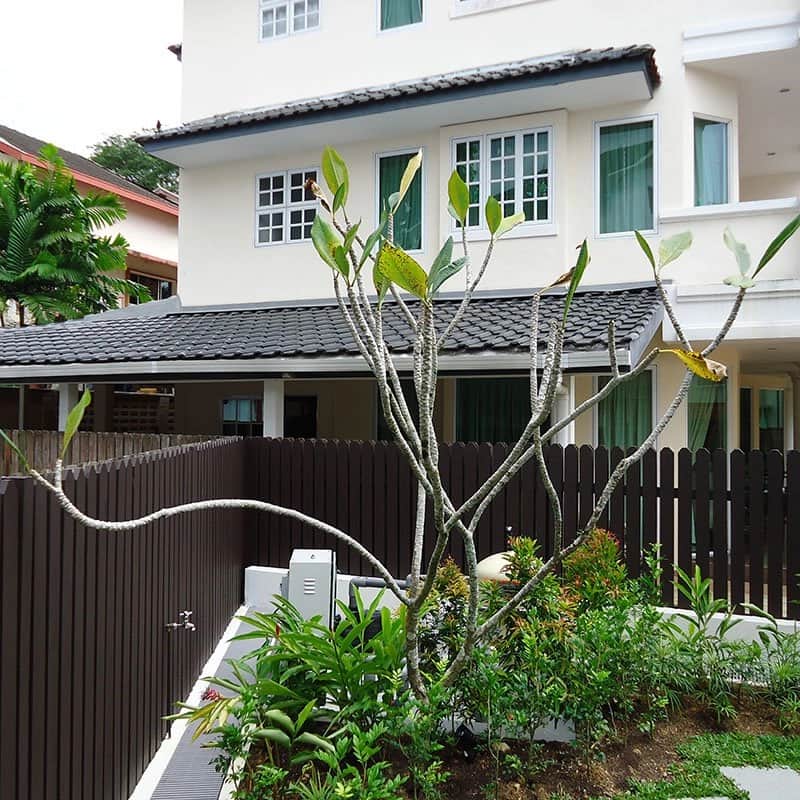
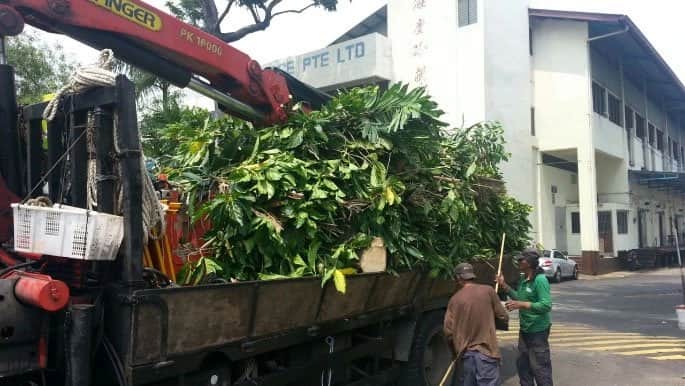
Tree pruning cuts part of a tree and the tree keeps growing. Tree cutting, or removal, takes the whole tree out. Pruning is the answer when the tree is sound and the branches have got long, which is most of the time. Removal is the answer when the tree is dead, unsafe, or in a place it cannot stay. If you are not sure which you are asking for, describe the problem rather than the job, and let whoever quotes it tell you.
- Pruning keeps the tree. Cutting means it is gone for good.
- Most trees that look dangerous only need pruning.
- "Tree cutting" is used loosely. Some contractors mean removal by it and some mean any cutting at all, so check what a quotation actually covers.
- Removal is sold two ways — flush to the ground, or with the rootball dug out.
- Ask for the outcome, not the technique, and you cannot order the wrong job.
Most people ring up asking for one and describing the other. It does not matter, and no reasonable contractor will hold you to the words. But it helps to know which job is being quoted.
What is the difference between tree cutting and tree pruning?
One removes part of the tree. The other removes the tree.
| Tree pruning | Tree cutting and removal | |
|---|---|---|
| What happens to the tree | Part of the crown comes off. The tree lives and regrows. | The whole tree comes down. It does not grow back. |
| What it is for | Health, shape, safety, clearance from a building | A tree that is dead, unsafe, or in the wrong place |
| How often | Every one to three years for most trees | Once |
| What is left behind | A smaller, healthier tree | A stump, unless you have the rootball taken out too |
| Reversible | Yes, it grows back | No |
| Advertised market range | About S$200 – S$800 a tree | About S$300 – S$5,000+, by size and access |
| Needs a crane? | Sometimes, for a tall crown | More often, and that is the biggest price step |
Those money figures are ranges other Singapore contractors publish, not our prices. They are here so you know roughly what bracket you are in. Crystalene assesses every site before quoting, and there is more on why in what it costs to cut a tree.
What counts as tree pruning?
Four jobs, and they are not interchangeable. This is what a quotation will name.
| Type | What it does | When you want it |
|---|---|---|
| Standard pruning | Routine tidy-up. Takes off dead, damaged and crossing branches. | Regular upkeep on a healthy tree |
| Crown cleaning | Deadwood and broken limbs out of the canopy, nothing live removed. | The tree is fine but dropping bits |
| Crown reduction | Shortens the branches to make the whole crown smaller. | The tree has outgrown its space |
| Pollarding | Cuts back hard to the main framework, then repeats on a cycle. | A tree kept deliberately small, for years |
Crown reduction and pollarding are the two people mix up most, and choosing wrong is expensive because pollarding commits you to repeating it. That comparison has its own post: pollarding and crown reduction.
One thing worth saying plainly, because it is the request our arborists turn down most often. More is not better. A quotation agrees a 25% crown reduction, the crew is up in the tree, and the ask comes to take 40% or 50% instead while everyone is already there. A percentage is a judgement about how much the tree can carry and still recover. It is not an opening price. We cut to the agreed scope.
What counts as tree cutting or removal?
Taking the tree down, and it is sold two ways. The difference is what happens to the ground afterwards.
| Option | What you get | Choose it when |
|---|---|---|
| Cut flush to ground level | Tree down and carted away. The stump and roots stay in the ground. | You do not need the ground for anything |
| Including grubbing up the rootball | Tree down and the rootball dug out as well. | You are building, paving or replanting there |
Flush to the ground is cheaper and is what most people need. Grubbing out the rootball is a bigger job with heavier machinery, and you only pay for it if the ground has a job to do. If you are undecided, the stump can be dealt with later — what to do with the stump covers grinding and the alternatives.
Which one does your tree need?
Work down this list and stop at the first line that sounds like your tree.
| If this is your situation | You need |
|---|---|
| Branches over a roof, a car, a walkway or the neighbour's boundary | Pruning — crown reduction |
| The tree drops dead twigs and small branches | Pruning — crown cleaning |
| It has simply got too big for the spot | Pruning — crown reduction, or pollarding if it will keep happening |
| It blocks light or a view | Pruning first. Removal is rarely the proportionate answer |
| The tree is dead, or a large part of it is | Removal |
| It is leaning more than it used to, or the ground at the base has lifted | Get it assessed today. This is the one that does not wait |
| It came down or split in a storm | Removal, and ring rather than email |
| You are building or paving where it stands | Removal, with the rootball out |
| You genuinely cannot tell | Send a photo. That is what the free assessment is for |
The short version: if the tree is sound, prune it. If the tree is unsound, or the spot is needed for something else, remove it. Everything else is detail.
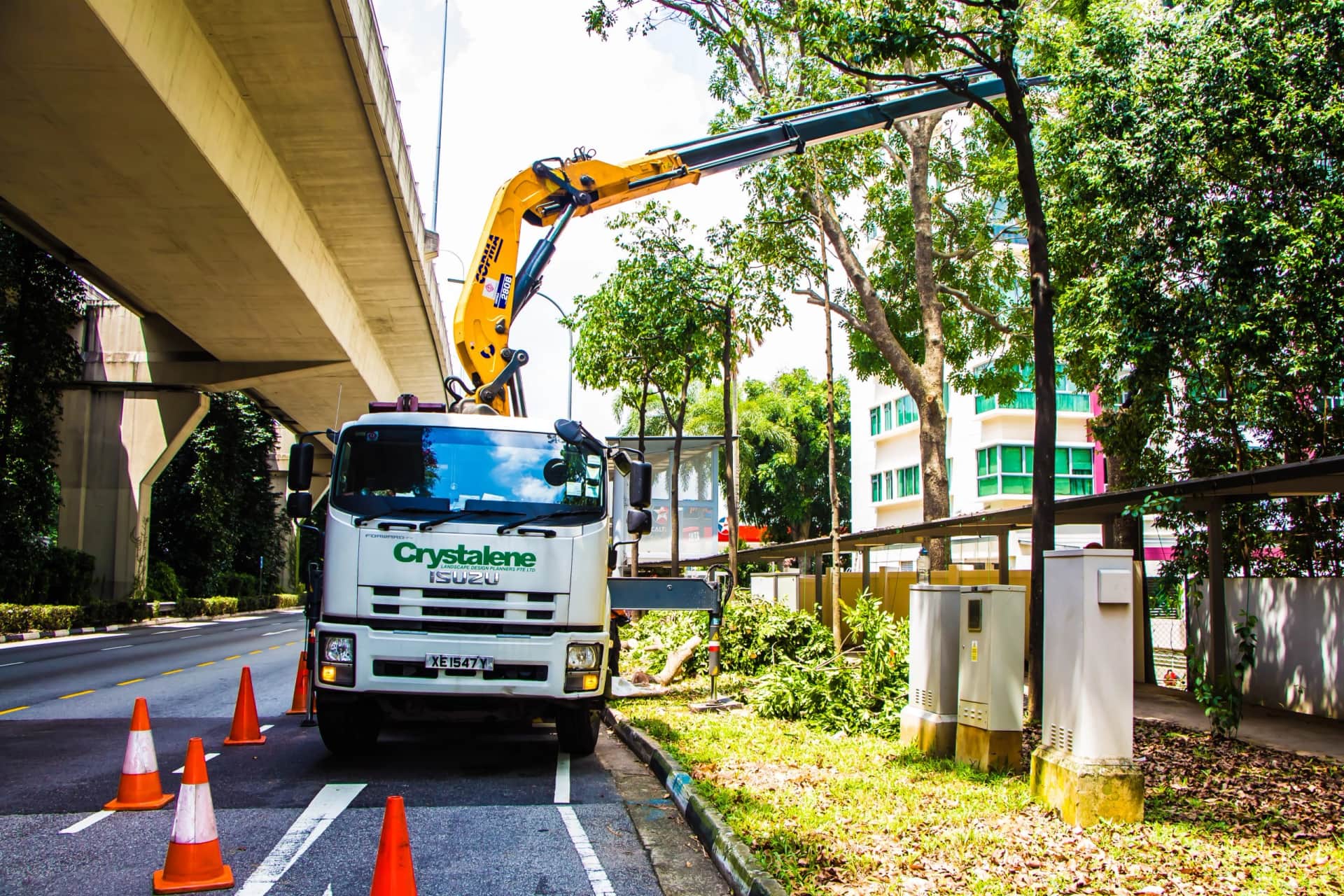
Two of those lines deserve more than a row in a table. Whether a particular tree can be saved is a judgement about the tree, not about the words, and when a tree needs pruning and when it needs removing walks through what an arborist actually looks at. If a tree has already come down, start here.
Is pruning always cheaper than removal?
Per visit, almost always. Over the life of the tree, it depends on how long you keep it.
Removal is one bill and then the tree is gone. Pruning is a smaller bill every few years for as long as you have the tree, plus whatever the tree gives you back in shade and screening. For a sound tree in a spot where you want a tree, pruning wins comfortably. For a tree that is going to be a problem every year in a spot that never suited it, paying to prune it forever is the expensive option.
Six things move either price: how accessible the tree is, its size and height, the type and scope of the work, how complex it is and what equipment that calls for, the documentation and administration involved, and the site itself, which is assessed individually before we quote.
Does either one need NParks approval?
It can, for either job. Whether it applies to your tree is not something to guess from a website.
At the site visit we confirm where the tree sits and whether it is inside a Tree Conservation Area. Where approvals or permits are needed, we obtain them before the works are carried out, so you are not left to work it out or file anything yourself.
What should the quotation say?
Enough that you could hand it to somebody else and they would do the same job. Whichever of the two you are buying, look for four things.
- Which job, in the words above. "Tree cutting" on its own is ambiguous. "Crown reduction, 25%" or "remove, flush to ground level" is not.
- What happens to the waste. Cutting is half the work. Carting it away is the other half, and it is what a cheap quotation leaves out.
- The stump. Ground out, dug out, or left. Three different prices.
- Access and equipment. If a crane is needed, it should be on the paper before it is on the invoice.
There is a fuller checklist in how to choose a tree cutting contractor.
How do you find out without guessing?
Describe the problem, not the job. Say "the branches are over my roof" rather than "I need pruning", and let the arborist name the work. You cannot order the wrong thing that way.
Send a photo on WhatsApp. Get the whole tree in frame including the top, include something for scale, and show what is underneath the branches. Two pictures usually settle it. If it needs seeing in person, we arrange a site visit before any tree cutting or pruning is quoted, and either way the quotation is free and you are not committed to anything.