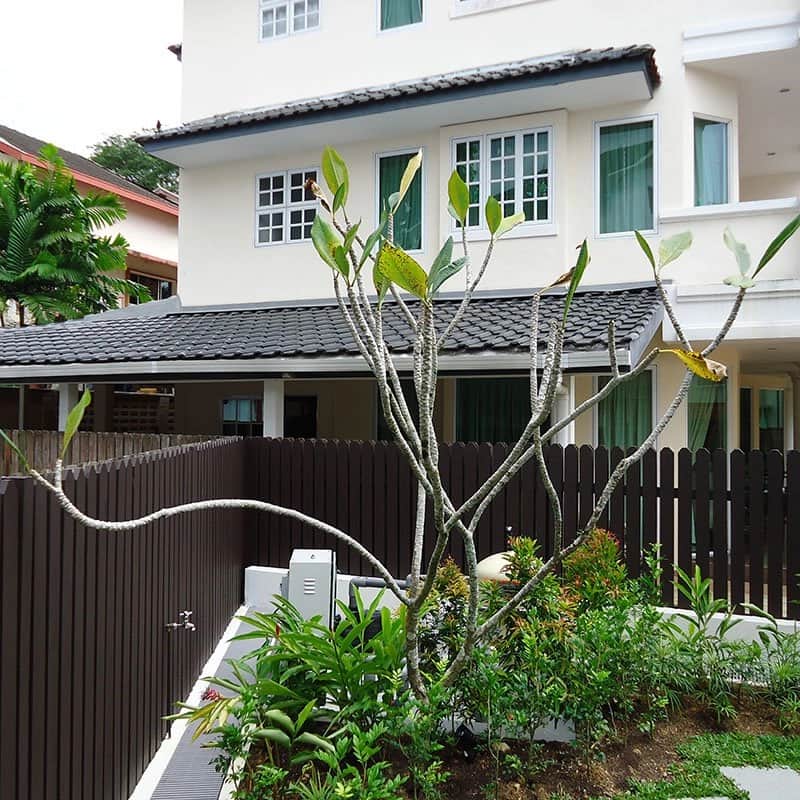
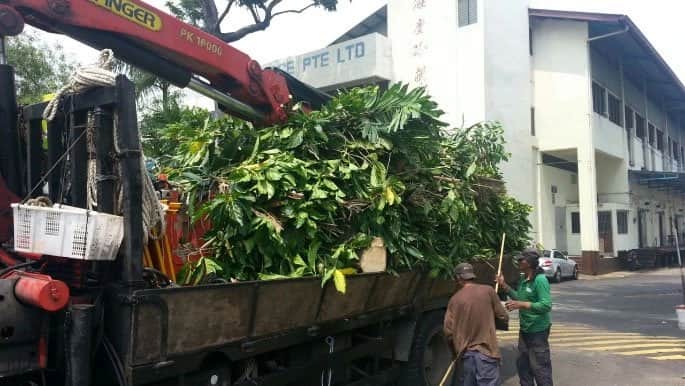
Most trees that look dangerous only need cutting back. A tree usually only has to come down when it is dead, when the trunk is split or hollow, or when the roots have lifted. An ISA-certified arborist can tell which it is by looking at the trunk and the base of the tree.
- Most trees can be saved. Dead branches and a dense crown are pruning jobs.
- Four signs mean removal. Split trunk, hollow base, new lean, no leaves at all.
- A new lean is the urgent one. Lifted soil on one side means a root problem.
- Approval can apply. Larger trees and conservation areas need NParks clearance.
- A photo is usually enough for an arborist to tell you which job it is.
People usually call us after a storm, or after a branch has come down on a car. The first question is almost always whether the whole tree has to go. Most of the time it does not.
This post covers what to look for, and when it is worth getting someone to check it properly.
What does pruning actually do?
Pruning takes weight off the parts of a tree most likely to fail, and it takes out branches that are already dead. It is not tidying.
A tree carries its own weight fine until something changes. A limb dies. Wind gets into a crown that has grown too dense. A branch grows out over a driveway and gets long enough that its own weight becomes the problem. Pruning fixes all three without touching the healthy structure.
That is why a tree that looks frightening is often a small job. The danger is usually in a few branches, not the whole tree.
It also buys time. A tree that is sound but overgrown gets years back from one good prune, and the same tree left alone drops the limb it was always going to drop. In this climate that gap is short. Trees here put on growth all year round, so a crown that was comfortable two years ago can be carrying a lot more weight than you think.
Which signs mean a tree can be saved?
These are the ones we see most often, and none of them means the tree has to come down.
- Dead branches in an otherwise green crown. Common and normal.
- Branches growing over a roof, a wall or a road.
- A crown that has grown dense enough to catch the wind.
- A tree that has simply got too tall for where it sits.
- Storm damage to one or two limbs, with the trunk still sound.
What these have in common is that the trunk and the roots are still doing their job. The problem is in the branches, and branches can be taken off and regrown. Once you know that, most of the panic goes out of the situation.
Which signs mean a tree has to come down?
These are the ones worth acting on quickly.
- The trunk is split, or you can push a screwdriver into soft rotten wood.
- A large hollow at the base, or fungus growing out of the trunk.
- The whole tree has started to lean, and the soil on one side has lifted.
- No leaves at all through a growing season, and the twigs snap dry.
- Roots have been cut through by works nearby.
The one to take seriously is the lean with lifted soil. A tree that has always leaned is usually fine. A tree that has recently started to lean, with the ground cracking on the opposite side, has a root problem and can fail without warning.
Fungus at the base is the one people miss. Bracket fungus growing out of the trunk or the root flare is feeding on wood that used to be structural, and by the time it fruits on the outside the decay inside is well along. The crown can still look perfectly green while that is happening, which is why a healthy top is not proof of a healthy tree.
What does an arborist check on a site visit?
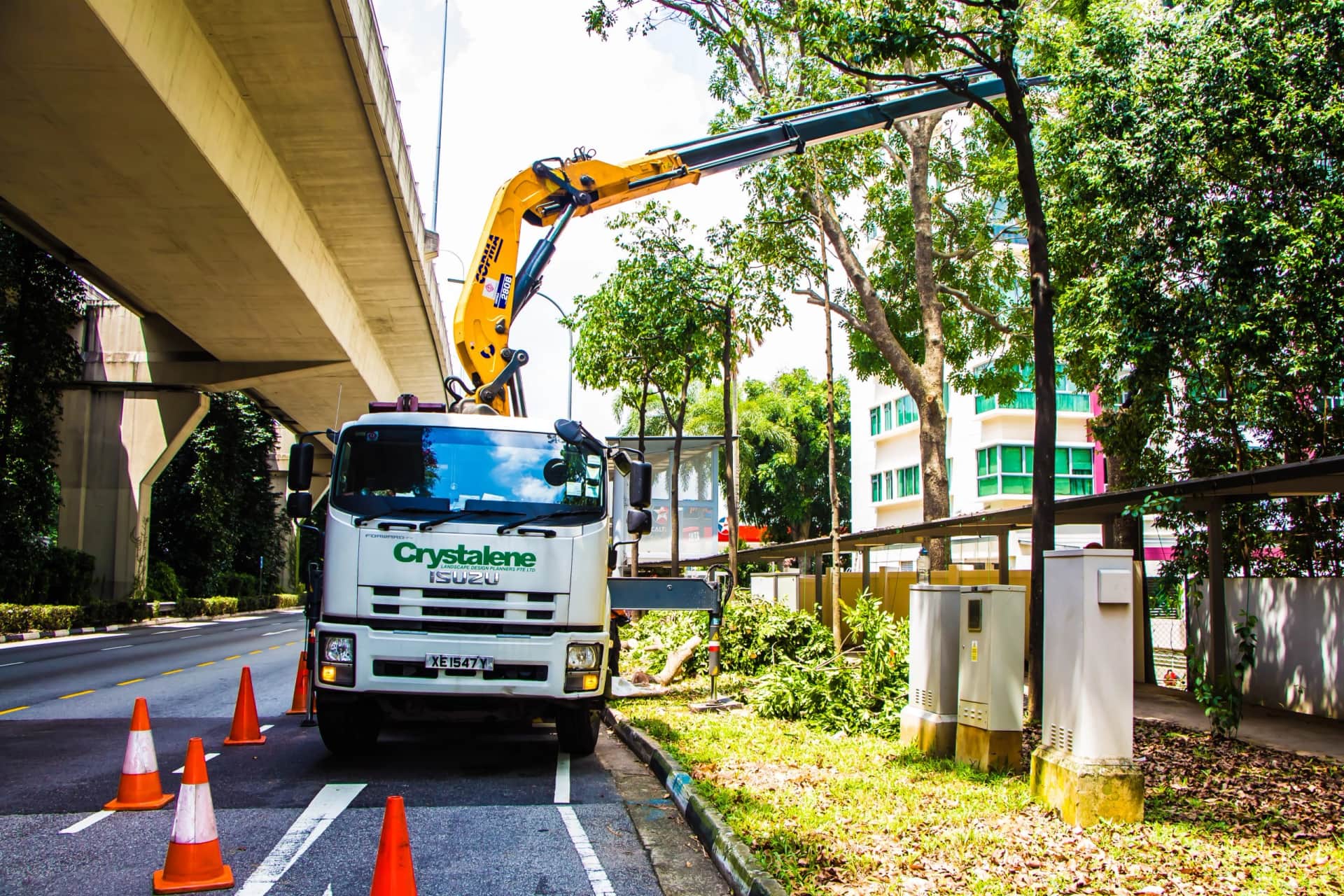
The base of the tree first, then the trunk, then the crown. The order matters, because a fault at the bottom decides the answer no matter what the top looks like.
Here is what gets looked at.
- The root plate. Lifted soil, cracks in the ground, roots cut by nearby works, or paving that has been laid over the root zone.
- The trunk and the root flare. Splits, cavities, soft wood, bleeding, and any fungus growing out of it.
- The union points. Where two big limbs meet the trunk. A tight fork with bark trapped inside it is a common failure point in a big tree.
- The crown. Deadwood, the density of the canopy, and whether the weight is spread evenly or all out on one side.
- What sits underneath. A carpark, a walkway, a boundary wall or a service line changes how a job has to be done, and sometimes whether it can be done at all.
That last one surprises people. Two identical trees get two different answers because of what is beneath them.
What if the tree is only too big?
Then it gets cut back rather than removed. There are two ways to do it and they are not the same job, so it is worth knowing which one you are being quoted for. We wrote about the difference in pollarding and crown reduction.
Do you need approval to remove a tree in Singapore?
Sometimes. Some trees need approval from NParks before they can be cut, and it is worth finding out before you agree a price rather than after.
Crystalene is an NParks approved contractor. At the site visit we check where the tree is and whether it sits inside a Tree Conservation Area. Where approvals or permits are needed, we obtain them before any work starts.
Send us a photo and tell us where the tree is, and we will tell you what applies before anyone starts cutting.
What happens after the tree comes down?
The stump and the waste are part of the job, and they are worth agreeing up front. A removal that stops at ground level leaves you with a stump, a root system and a pile of timber to deal with.
Ask three things. Whether the stump is being ground out or left. Whether all the cut material is being carted away. And what happens to the space afterwards. The stump is the item most often missing from a quotation, and the options are set out in what to do with the stump after a tree comes out.
That last question is the one people forget. A mature tree leaves a hole in a garden that is more obvious than they expect, and the ground under it has been in shade for years. If something is going back in, it is easier to plan the replanting while the crew and the access are already there.
How do you get a tree checked?
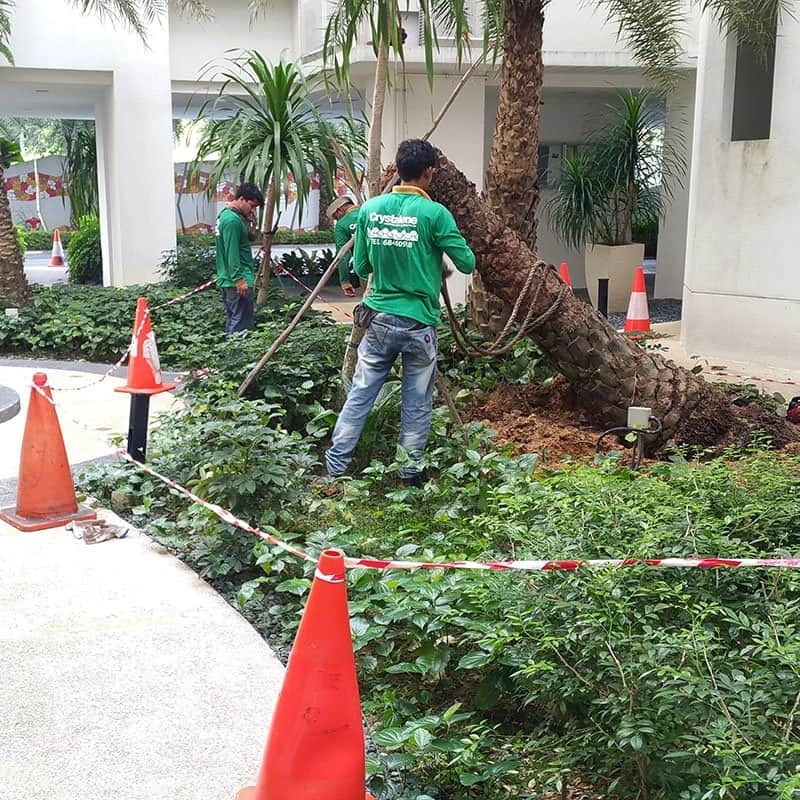
Send a photo on WhatsApp. Stand back far enough to get the whole tree in, and take a second picture of the base of the trunk. That is usually enough for our arborists to tell you whether it is a pruning job or a removal.
If the tree is in a private garden, the way the job runs is covered in tree cutting at a landed house.
If a tree has already come down, or a trunk has split, call instead. That is a safety problem before it is a landscaping job and it is much faster to sort out on the phone.