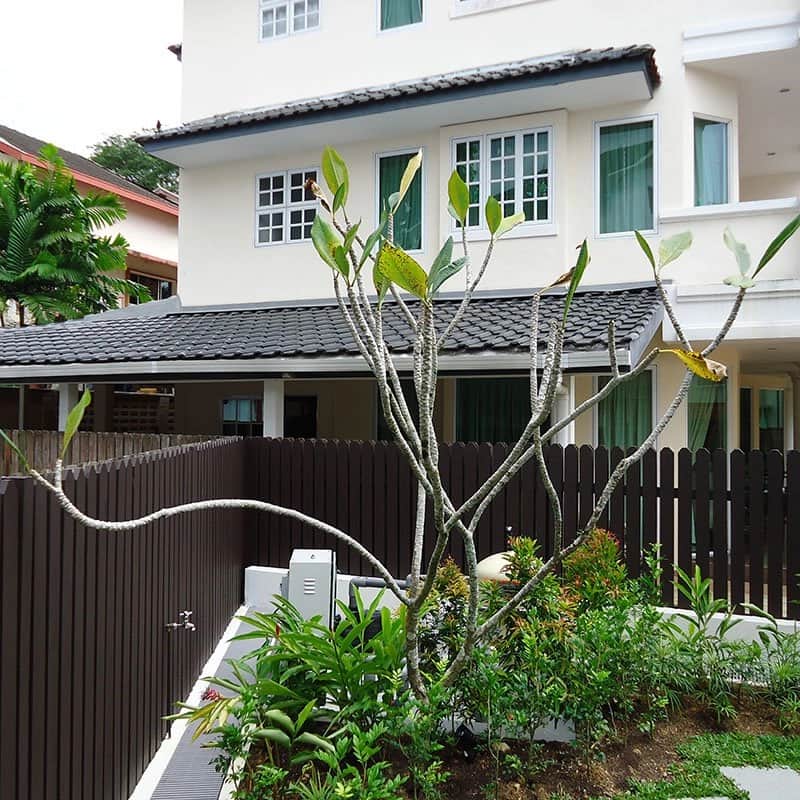
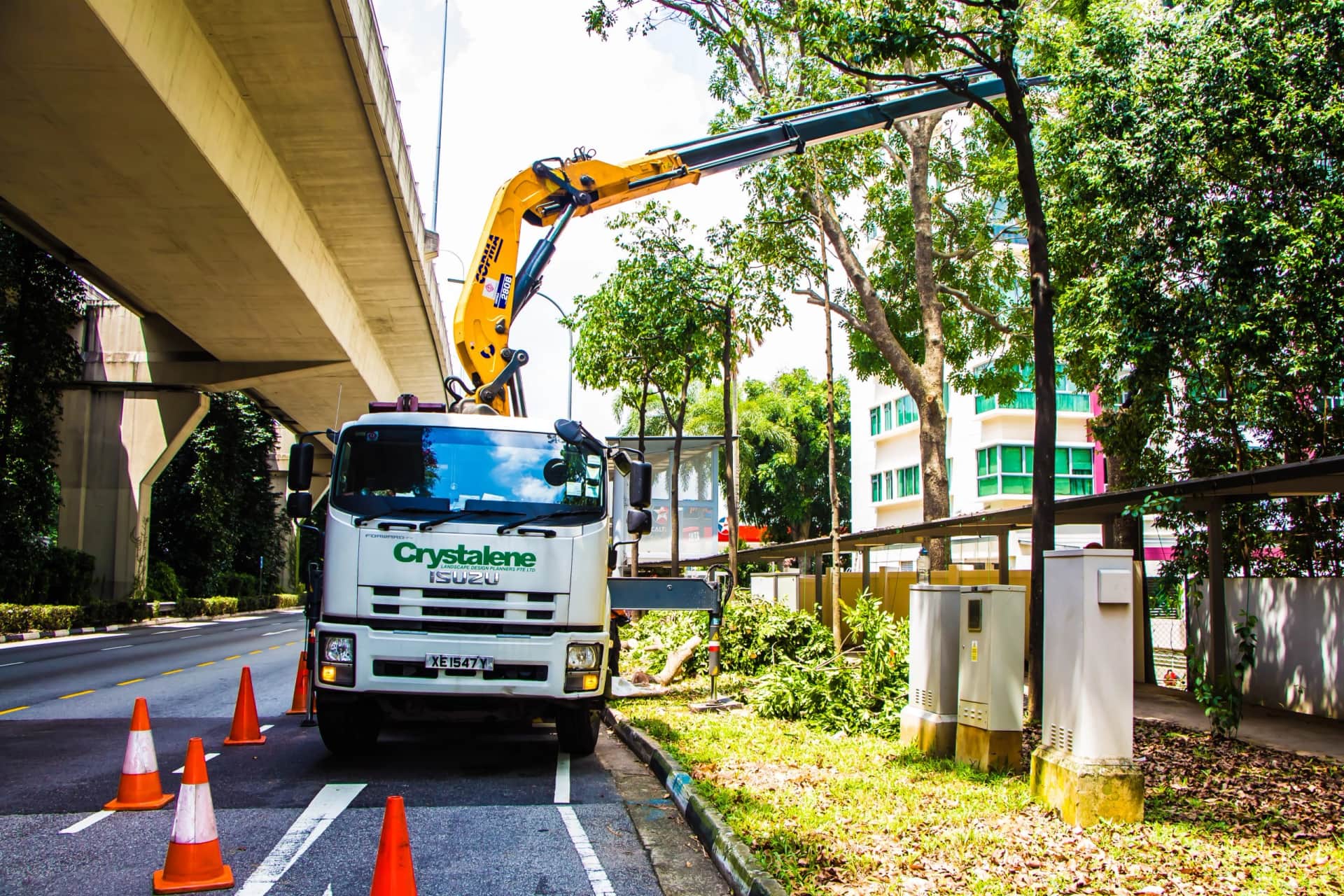
Crown reduction makes a tree smaller while keeping its natural shape, by shortening branches back to a growing point. Pollarding cuts the main limbs back hard to the same points every few years, which keeps a tree small but commits you to repeating it. Crown reduction suits most private gardens. Pollarding suits trees already kept to a fixed size.
- Crown reduction keeps the shape. Branches shortened back to a growing point.
- Pollarding changes the tree. Main limbs cut back to the same points, every time.
- Pollarding is a commitment. Once started, it repeats every two to five years.
- Most gardens want crown reduction. It fixes the overhang and the tree carries on.
- Topping is neither of them. A crown chopped at a convenient height rots.
Both jobs get described as cutting a tree back, and on a quotation they can look interchangeable. They are not. One is a trim the tree recovers from. The other is a commitment you keep making every few years.
What does crown reduction do?
Crown reduction shortens the branches around the outside of a tree. Each cut goes back to a smaller branch that is already growing there, so the tree still has a growing point to push from.
The tree ends up smaller and lighter but keeps the shape it had. Done well you would struggle to tell it had been cut at all a year later.
This is the right answer for most gardens. It reduces the weight over a roof or a boundary, it lets more light through, and the tree carries on as normal.
There is a limit to how much can come off in one go. Take too much and the tree loses more leaf than it can afford, and it answers by throwing out weak growth everywhere. A reduction is a measured cut, not a haircut, which is why the person doing it matters as much as the tool.
What does pollarding do?
Pollarding removes the whole crown and cuts the main limbs back to the same points on the trunk. The tree regrows from those points as a dense head of new shoots.
It is the harder option and it changes the tree permanently. Once a tree has been pollarded it has to be pollarded again, usually every two to five years, because the new growth attaches at the cut points and gets heavier each year until it is a hazard.
Pollarding is the right answer when a tree genuinely cannot be allowed past a certain size, or when it has already been pollarded before.
It also works best when it starts early. A tree pollarded while the limbs are still young forms a proper knuckle at each cut point and handles the cycle well. Starting it on a mature tree with big limbs is a much heavier wound, and the tree has less in reserve to close it.
How do the two compare?
| Crown reduction | Pollarding | |
|---|---|---|
| What you end up with | The same tree, smaller | A trunk with a dense new head |
| Keeps its natural shape | Yes | No |
| How often you repeat it | Every few years, or never | Every two to five years, always |
| Best for | Most private gardens | Trees already kept to a fixed size |
The row that costs money is the third one. Crown reduction is a job you may never repeat. Pollarding is a standing line in the budget for as long as the tree is there, and skipping a cycle is worse than not starting, because the regrowth keeps getting heavier on the same old cuts.
Which one does your tree need?
Three questions usually settle it.
- Has this tree been cut back hard before? If the limbs end in a knuckle of old cuts, it has been pollarded and it needs pollarding again.
- Does it have room to be a tree? If the only problem is that it overhangs the house, crown reduction is enough.
- Is there a hard limit on the height? A tree under a service line or against a boundary may not have the room for anything else.
The knuckle is the giveaway on the first question. Look at where the branches end. Pollarded limbs finish in a swollen, lumpy head with a lot of thin shoots coming out of it. A tree that has only ever been reduced tapers to normal branches, and nothing about it looks like a fist.
How much can you take off at once?
Less than most people expect, and this is where good work separates from cheap work.
Leaves are how a tree feeds itself. Stripping a crown in one go leaves the tree short of energy at exactly the moment it is trying to close a lot of fresh wounds. Where a tree needs a great deal taken off, a proper reduction is spread over more than one visit, with a season in between to let it recover.
That is worth knowing before you compare two prices, because a contractor happy to remove most of a canopy in an afternoon is topping the tree, whatever the quotation calls the job. The staged version looks slower and more expensive on paper. It is the one that leaves you with a tree.
It also cuts the other way, and this is the thing our arborists get asked to do most often that they will not. A quotation agrees a 25% crown reduction; the crew is up in the tree on the day, everything is already set up, and the request comes to take 40% or 50% instead while everyone is there. More is not better. A 25% reduction is a decision about how much the tree can carry, not an opening price to negotiate up from. We cut to the agreed scope. There is more on this in the mistakes we see most often.
Can any tree be pollarded?
No, and it is not a decision to make from a photograph.
Some species tolerate hard cutting and shoot readily from old wood. Others never recover from it and simply decline. Age matters as much as species, because a mature tree with heavy limbs takes a far bigger wound than a young one and has less capacity to close it.
There is also the tree's history. A tree already carrying decay, or one that was topped badly years ago, is not a candidate for a cycle that depends on the old wood staying sound.
Have an arborist look at the tree before committing it to pollarding, because the commitment lasts the rest of the tree's life.
When is neither one the right answer?
When the problem is not the size of the tree. Cutting back a tree that is failing at the base does nothing for the reason it is dangerous, and it costs money that would be better spent on the real job.
Two cases come up often.
- The tree is unsound. A split trunk, a hollow base or a new lean is a structural problem, and no amount of shortening the branches fixes it. That is a removal conversation.
- The tree is fine and just untidy. Some trees get cut back because a bed looks overgrown, not because anything is wrong. Deadwooding and a light tidy often does everything the owner actually wanted.
There is a third case worth naming. Sometimes the honest answer is that the tree is in the wrong place and always will be, and the money goes further on taking it out and planting something suited to the spot.
What is topping, and why avoid it?
Topping is the crown chopped off at a convenient height with no thought for where the cuts land. It is quick and it is cheap and it looks like pollarding to anyone who is not an arborist.
The tree responds by throwing out weak shoots that are poorly attached, and the open cuts let decay into the trunk. A few years later you have a tree that is both uglier and more dangerous than the one you started with.
You can usually spot it afterwards. The cuts are big, flat and mid-limb, with nothing left growing beyond them, and the regrowth is a broom of thin shoots sitting on wood that has started to darken. The tree is now on a schedule nobody chose, because that regrowth has to be managed for the rest of its life.
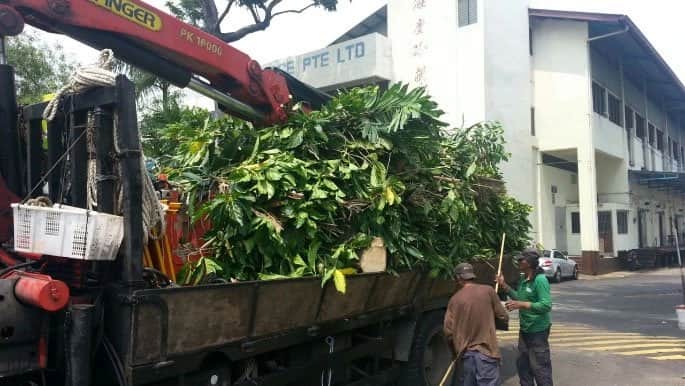
That is the real reason to ask which job is being quoted. Two prices that look similar can be two very different pieces of work.