There is no fixed interval. The useful rule is to look at every mature tree once a year and cut back the ones that need it before the heavy weather arrives. Trees here grow all year round, so a tree left alone for five years is a much bigger job than the same tree seen every year.
- No dormant season here. Trees grow through the whole year, so they never pause.
- Inspect yearly, cut as needed. The check is the schedule, not the cutting.
- Time it before the wet months. Wet foliage is heavy foliage.
- Skipping years costs more. A big cut is one job priced like three.
Most advice about pruning intervals was written for countries with a winter. None of it applies here.
How often should trees be cut back in Singapore?
Look at every mature tree once a year. Cut back the ones the look tells you to.
That sounds like a dodge and it is not. An interval is the wrong shape of answer, because two trees of the same age on the same street can need work three years apart.
A young garden tree can go several years between cuts and only needs shaping. A mature tree over a driveway usually has something worth doing every year, even if it is only deadwood. A fast growing tree earns a look every year without argument, because height gained quickly is not held strongly.
Where the tree stands matters as much as what it is. A tree with room to spread is on its own schedule. A tree over a car park or a walkway is on yours.
Why do trees here grow back so fast?
Because nothing stops them. Singapore has warmth, rain and daylight in roughly the same quantities all year, so a tree never shuts down and never waits.
In a temperate country a tree does its growing in a few months and holds still for the rest. That is why so much pruning advice is about timing, and why intervals of five or ten years appear in it.
Here the tree keeps going. A crown that was reduced looks reduced for a season and then starts closing the gap. Cut a tree back hard and it grows back faster, not slower, because it is replacing what it lost with everything it has.
A tree left for five years has not waited for you. It has spent five years getting further from where you wanted it.
When is the best time of year to do it?
Before the wet months rather than during them. Timing matters less here than in a temperate country, but it is not nothing.
Rain adds real weight to a crown. A branch that carries itself in dry weather can be carrying a great deal more water and leaf after a downpour, and that is the moment weak attachments give way. Squall winds arrive with the same weather.
So get the yearly look done ahead of the heavier months, book what needs doing, and have it cut before the weather is testing it.
There is a practical reason too. Everybody calls a tree contractor in the same week after a bad storm. Nobody calls in the quiet month before it, which is when the work is easier to schedule around residents and parking.
What happens if you leave it too long?
It gets more expensive, and it stops being a pruning job.
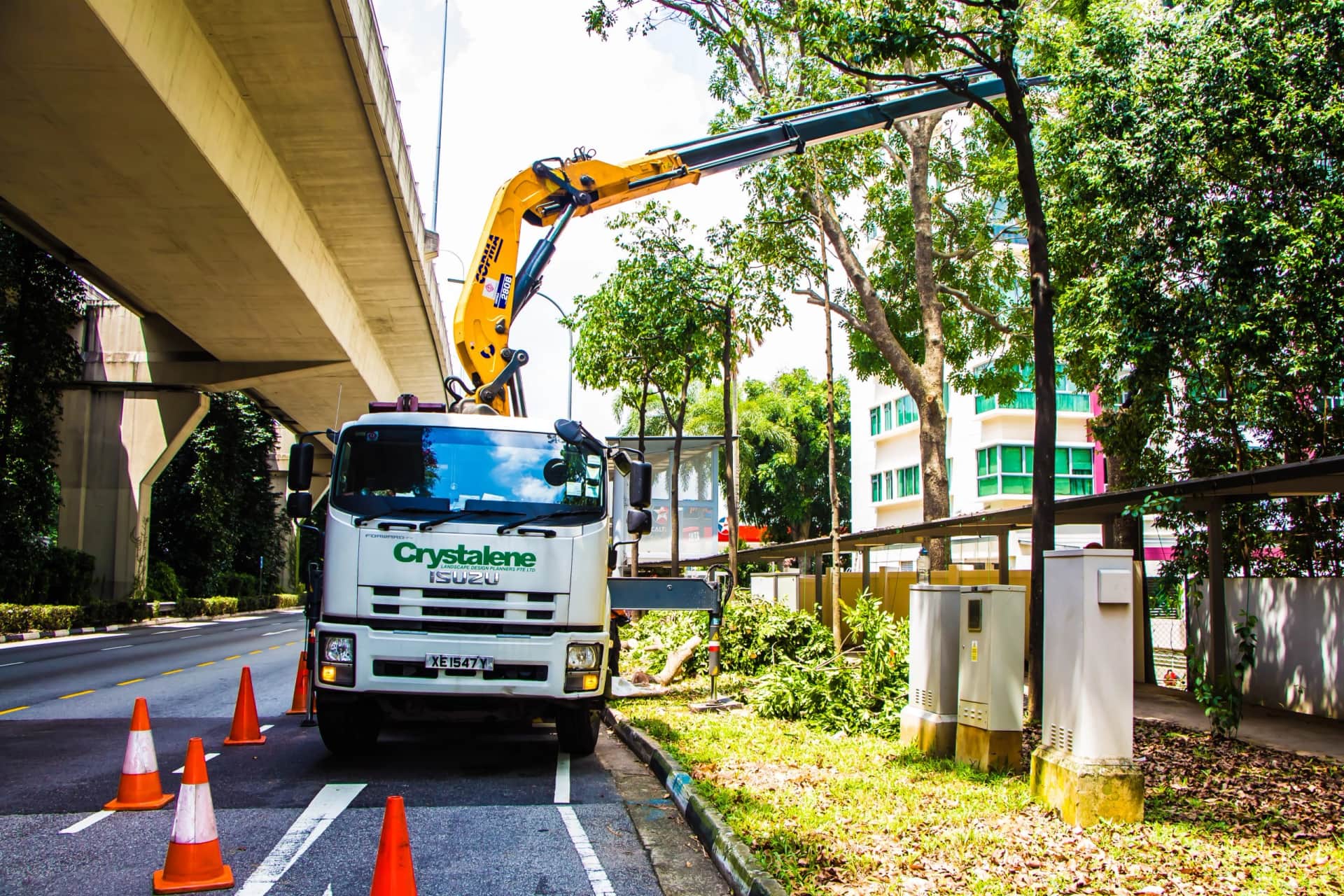
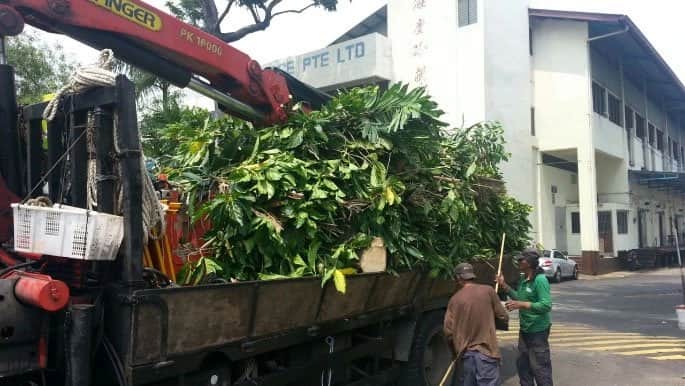
A tree seen every year needs small cuts. The crew is in and out and the material fits one load. Leave the same tree for several years and the branches you now have to remove are large. Large branches have to be rigged and lowered rather than dropped, the waste multiplies, and the job can need machinery it would not have needed before.
The tree pays too. Taking a lot off a neglected tree in one go is a shock, and the regrowth that follows is fast, weak and badly attached. See pollarding and crown reduction for what that looks like and what to ask for instead.
How do I know a tree is due?
Stand well back and look at the whole thing, then walk up and look at the base. Most trees tell you before anyone has to measure anything.
Worth a call if you can see any of these.
- Deadwood in the crown. Bare grey branches among the green ones.
- Branches touching something. A roof, a wall, a light, a line, a window.
- A crown gone heavy on one side. Especially over a driveway.
- Anything growing out of the trunk or the base. Fungus, or soft bark.
- Regrowth from old cuts. Thin shoots in a bunch where a branch was taken.
The base matters more than the crown. A tree can be green and full and still be failing at ground level, which is the part nobody looks at. More on that in when a tree needs pruning and when it needs removing.
Can I cut a tree back myself?
Low branches you can reach standing on the ground, yes. Anything needing a ladder or a chainsaw above shoulder height, no.
Tree work injures people who are perfectly competent with tools but have never been taught how a cut tensions a branch. A limb under load does not fall where it looks like it will fall, and the moment it moves is the moment it is too late to reconsider.
There is the tree to think about as well. A cut in the wrong place leaves a wound it cannot close, so a bad afternoon with a saw costs you a tree that needs more work sooner. If you are unsure whether it needs cutting at all, send a photo and ask before you buy the ladder.