Most condominium planting beds need refreshing every three to five years. Turf in shaded or heavily walked areas usually goes sooner, often within two. Shrubs and mature trees last far longer and rarely need replacing on a cycle at all. The right interval depends on the spot, not on the calendar.
- Flowering beds go first. One to two years, and everyone walks past them.
- Shaded turf is next. Two years or less once the canopy closes over it.
- Ground cover lasts three to five years. It thins from the middle outwards.
- Trees and palms are not a replanting item. They last decades.
- Zone the site. Refresh one area a year instead of the whole grounds at once.
It is one of the questions MCSTs and managing agents ask most. An MCST is the management council that runs a condominium, and replanting is one of the costs it has to plan for.
The honest answer is that nothing on a site wears out at the same rate. Here is what actually goes first.
What wears out first, and how fast?
- Seasonal and flowering beds. One to two years. These are the ones people notice, because a tired flowering bed at the entrance is the first thing every resident walks past.
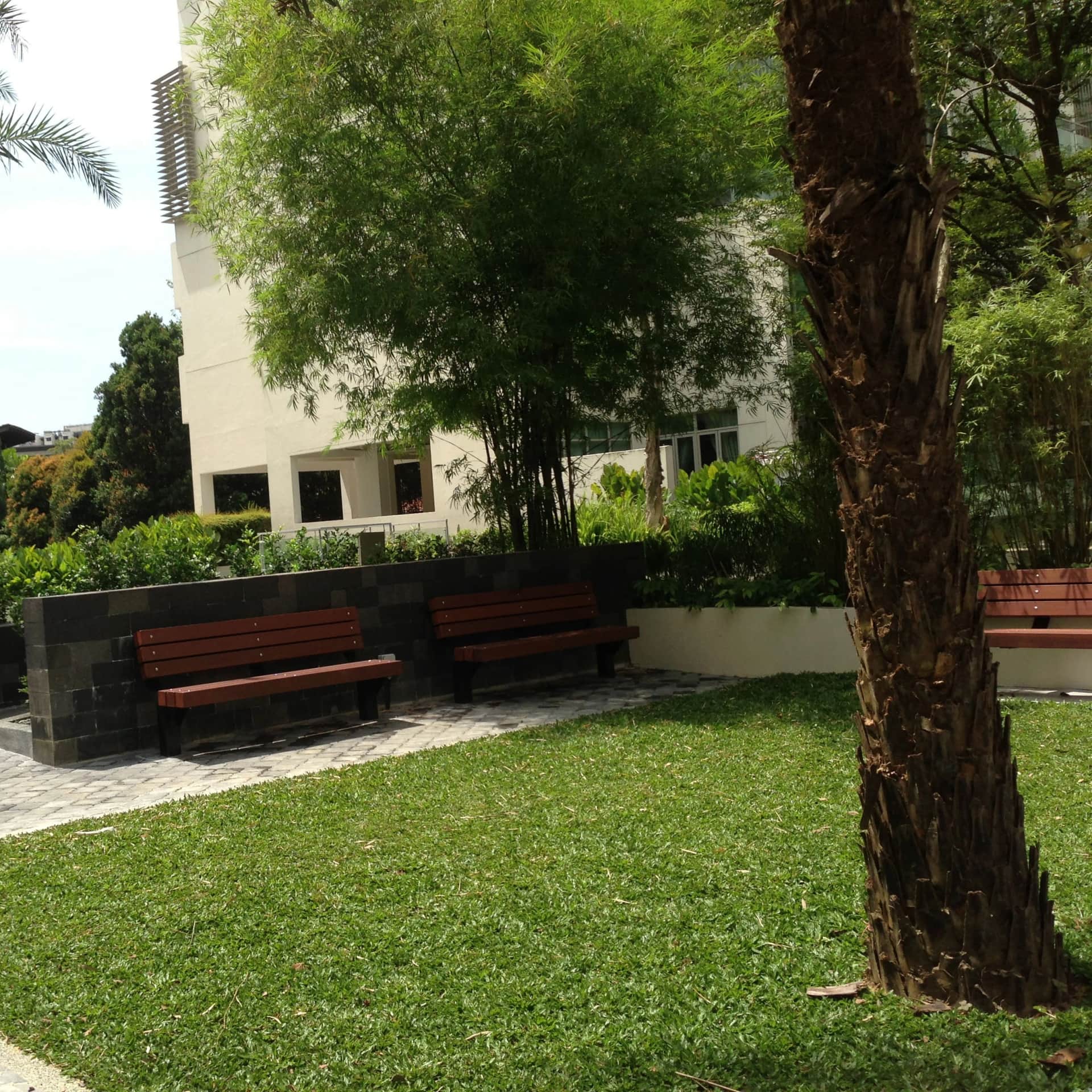
- Turf in shade or on a walking route. Two years, sometimes less. Grass under a mature canopy is fighting for light and it usually loses.
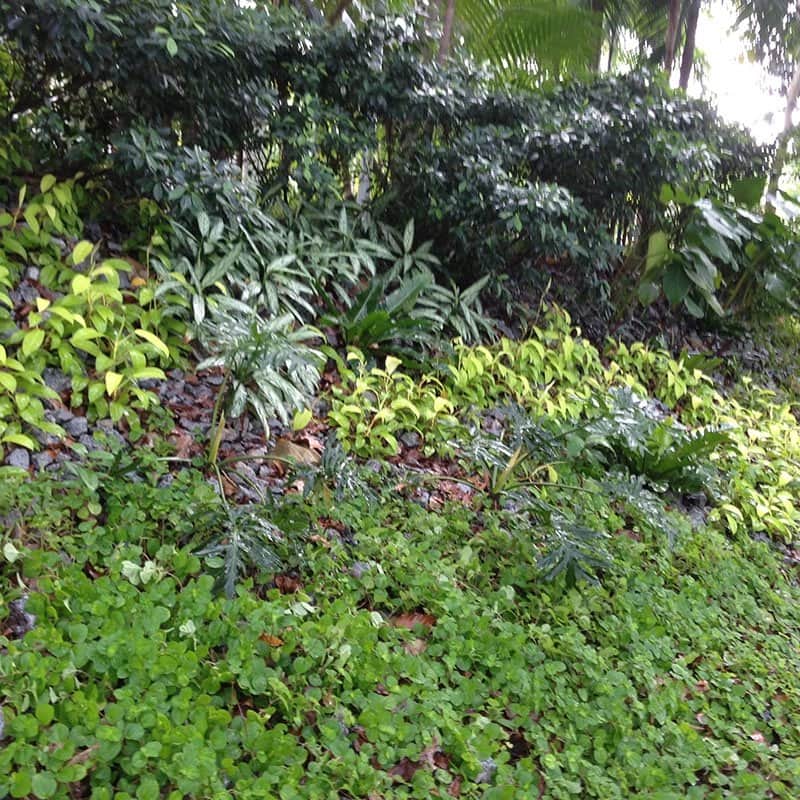
- Ground cover and low planting. Three to five years. It thins from the middle outwards before it looks bad.
- Shrubs and hedges. Five to ten years with proper pruning.
- Trees and palms. Decades. These are not a replanting item.
Read that list as a spending pattern rather than a schedule. A small part of the site turns over often, most of it turns over slowly, and the biggest, most valuable things on the grounds almost never turn over at all. A budget built the other way round, with an even amount set aside for everything, spends too much on the parts that are fine and not enough on the entrance.
How do you tell a tired bed from a failing one?
A tired bed still has healthy plants in it and simply looks past its best. A failing bed has plants that keep dying in the same spot no matter what goes in. The first is a cosmetic job. The second is a problem with the site.
Signs it is tired.
- Growth is even but leggy, and the bed has lost its shape.
- Colour has faded and the flowering has slowed.
- It looks thin from a distance and fine up close.
Signs it is failing.
- Bare patches in the same places every year.
- Plants that go in healthy and are gone within months.
- Standing water after rain, or soil that has set hard.
- Moss, or growth that leans hard towards the light.
Replanting a failing bed with the same plants is money spent on a repeat of the same result. Fix the reason first. Usually it is light, drainage or foot traffic, and all three have answers that are cheaper than replanting twice.
Why does turf near trees keep failing?
Because it is the wrong plant for the spot. As a landscape matures the canopy closes, the light drops, and grass that was fine at handover stops being viable.
Replacing it with more of the same grass buys about eighteen months. Changing to a shade-tolerant ground cover solves it properly, usually costs less over ten years, and takes less mowing.
If a patch of turf has been replaced twice and failed twice, that is the site telling you something.
There is a second cause worth ruling out at the same time. Grass on a corner that everybody cuts across is not dying from shade, it is being walked to death, and no species survives that. Beds like that need a path or a barrier rather than new turf.
How do you plan replanting as a cycle?
Replanting a whole condominium at once is expensive and disruptive, and it means the entire site ages together and hits the same problem again on the same day.
Zoning it works better. Split the grounds into three or four areas and refresh one each year. The cost flattens out across the budget, the site never looks half-finished, and there is always somewhere that has just been done.
The entrance and the pool deck are worth doing more often than the rest. They carry the impression of the whole place.
A cycle also makes the money easier to defend at a meeting. One area a year is a steady, predictable figure that sits in the operating budget. A full-site replant is a large number that arrives without warning, usually after the grounds have already been looking poor for a while.
What makes new planting last longer?
The preparation under it, more than the plants themselves. Most planting that fails early fails because it went into ground that was never going to support it.
Four things do most of the work.
- Right plant, right spot. Match the plant to the light and the drainage that spot actually has today, not the light it had at handover.
- Soil that drains. Compacted ground and clay that holds water kill more planting here than any pest does.
- Water while it establishes. New planting needs consistent watering for the first weeks. Most losses happen in that window.
- Mulch and edges. Mulch holds moisture and keeps weeds down, and a clean edge stops turf creeping into the bed and stops feet coming the other way.
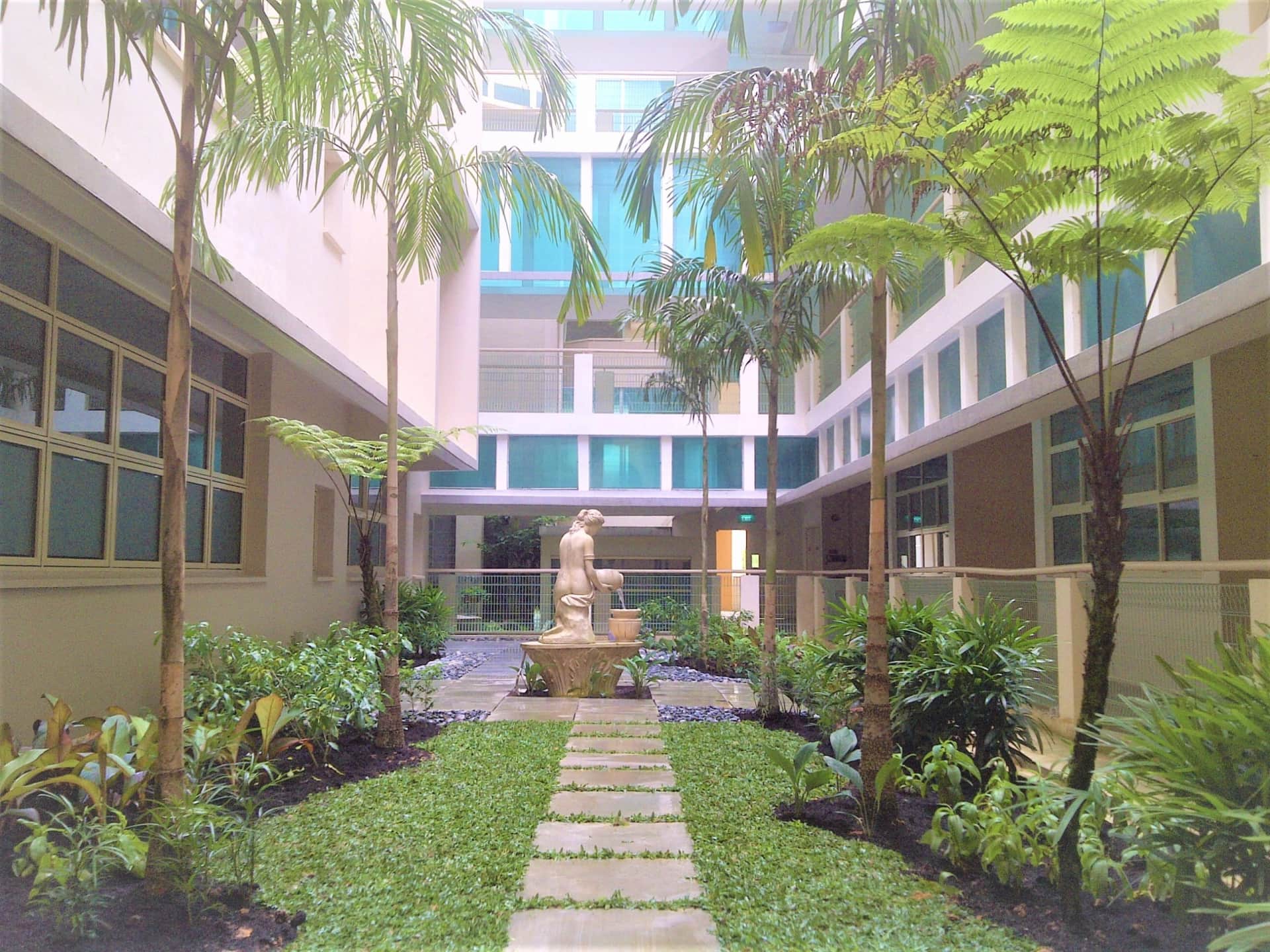
What to ask a contractor before you replant
- Why did the last planting fail. If nobody can answer, the new one fails too.
- Is this the right plant for the light and the drainage in that spot.
- What does it cost to maintain, not just to install.
- Is anything here still fine and being replaced only because it is on the list.
- What happens if it dies within the first few months.
That last-but-one saves the most money. A healthy bed does not need replacing because a schedule says so.
What we do on maintenance contracts
Crystalene maintains grounds across Singapore for MCSTs, schools, clubs and commercial sites. On a maintenance contract we track the condition of each area and flag what is coming up, so replanting is a planned line in the budget rather than a surprise.
We are bizSAFE Level 3 certified and an NParks approved contractor, which are the certifications MCST and commercial contracts usually ask for.