Most gardens in Singapore need someone every two weeks. Weekly suits anything with a decent lawn, because grass here does not stop growing for a winter. Monthly works only for gardens built around hardy shrubs, gravel and very little grass. How often someone comes should be set by how fast the garden grows, not by what a package costs.
- Every two weeks is the normal answer. That suits most gardens here.
- Weekly if you have lawn. Grass is the thing that cannot wait.
- Monthly needs the right garden. Little grass, hardy planting, gravel.
- Nothing stops growing here. No winter, so weeds run all year. See why.
- Skipping costs more than it saves. See what a missed month does.
Most advice on this question lists factors and never gives a number. This post gives the number first and then explains what moves it.
How often someone comes matters more than most people expect, because in this climate a garden does not decline slowly. It goes from fine to overgrown in about three weeks.
How often should a garden be maintained in Singapore?
Every two weeks for most gardens. Weekly where there is lawn that people look at or walk on. Monthly only where there is very little grass.
The deciding factor is almost always the grass. It grows fastest, so mowing is the job that cannot wait. How often the grass needs cutting is how often someone comes, and the rest of the work is fitted around that visit.
A rough guide.
- Weekly. Lawn you care about, an entrance, anywhere the look matters.
- Every two weeks. The normal landed home or small commercial garden. Some grass, mixed beds, hedges.
- Monthly. Gravel, paving, hardy shrubs, almost no grass.
- Quarterly on top. Feeding, pest treatment, watering checks and harder pruning, however often the visits are.
That last line is the one people miss. A weekly mowing round with no quarterly plant care still ends in a tired garden, it just takes two years instead of one.
Why does everything grow faster here?
Because nothing here ever slows down. Singapore is warm, humid and wet every month of the year, so plants grow all year with no break.
A garden in a cold country has months where almost nothing happens, so the visits can spread out. This one does not.
Three things run year-round as a result.
- Grass. It keeps growing, so mowing never becomes optional.
- Weeds. They germinate constantly and go to seed fast. A month is long enough for one weed to become a bed full.
- Fungal disease. Humidity moves it quickly, and wet leaves left lying on the grass are where it starts.
This is why a maintenance schedule copied from somewhere else leaves a garden here looking neglected within a fortnight.
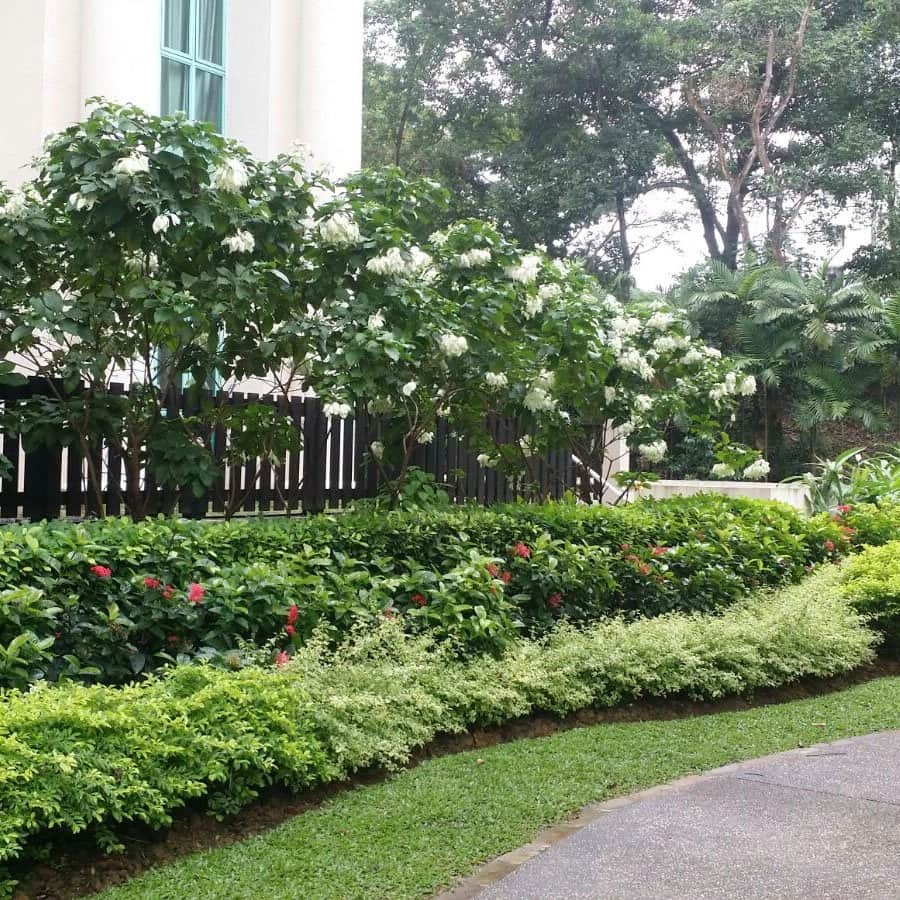
What needs doing every visit, and what only a few times a year?
Mowing, weeding and clearing up are every visit. Almost everything else is better done on a cycle, because doing it constantly stresses the plants.
- Every visit. Mow, edge, weed, clear the cuttings, blow the paths.
- Monthly or so. Trim hedges and shrubs, shape the beds.
- Quarterly. Feed the grass and beds, treat pests and disease, check the watering system, top up mulch.
- Yearly. Spike hard-packed lawn to let air and water in, harder pruning, replace anything failing.
Pruning is the one worth getting right. Cutting a hedge a little every visit keeps it dense. Cutting it hard twice a year leaves it bare inside and it takes months to recover.
If you are working out what to buy rather than how often, the guide to landscape maintenance covers who needs it, what moves the price and how to compare two quotations.
What happens if you skip a month?
The mowing gets harder, the weeds win, and the next visit costs more than the one you skipped.
Long grass cannot be cut back to normal height in one go. Take too much off at once and you cut into the stems, which leaves the lawn yellow. So a garden that has run long usually needs two visits to come back, or one much longer one.
The rest builds up quietly.
- Weeds that seeded once are now in every bed.
- Hedges lose their shape and have to be cut back hard, which leaves them bare.
- Fungal problems in the grass spread while nobody is looking.
- Climbers get into the hedges and the drains.
Stretching a two-week garden to monthly to save money usually ends up costing about the same, with a garden that looks worse for most of the year.
Does the monsoon change the schedule?
Yes, but not how often someone comes. What changes is what gets done on the visit.
In the wet months, roughly November to January and again around the middle of the year, growth speeds up and so does everything that goes wrong with it.
- Grass grows faster, so a two-week garden may want weekly for a while.
- Fungal disease spreads, so clearing fallen leaves matters more than usual.
- Drains and gullies block with leaves.
- Soil stays saturated, which is when root problems and leaning trees show up.
In the drier, hotter stretches the work shifts to watering, checking the sprinklers actually reach everything, and keeping mulch on the beds.
A visit missed in the wet months costs more than one missed in the dry.
How do I know my schedule is wrong?
The garden tells you before the contractor does. Four signs mean the gap between visits is too long for what you have.
- The grass is ankle-height and stringy by the day before each visit.
- Beds have weeds with flowers or seed heads on them.
- Hedges have grown long and bare in the middle.
- The garden only looks right for two or three days after each visit.
That last one is the clearest test. A garden on the right schedule looks acceptable the whole way through the cycle. If it only looks good immediately after a visit, the visits are too far apart.
The fix is not always more visits. Sometimes it is changing the planting, so the garden suits the schedule you want to pay for.
Setting a schedule that fits the garden
Crystalene maintains gardens and grounds across Singapore for landed homes, condominiums, commercial buildings and private schools. We look at the site before quoting, then set how often we come and what each visit covers against what is actually planted there.
You get job sheets every visit, so what was done is visible rather than assumed. We are an NParks approved contractor and bizSAFE Level 3 certified.